Photo-led cap feeding, bowl feeding and cap presentation systems for UK capping lines01494 623015   sales@lancinguk.com
Sorting and orientation

Cap sorters and cap orientation systems.

Sort, reject and present caps correctly before they enter the cap chute, placement head or capping station.

Need the feeder to match your cap and capper?

Send cap samples, photos, target output and the downstream capping machine details. The quickest shortlist starts with real parts, not a generic speed figure.

Send cap details
Specification focus

Wrong-way caps create downtime at the capping head.

A cap sorter protects the capping head from caps that arrive inverted, skewed, doubled-up or in the wrong orientation. It is often the difference between an automatic line that runs consistently and one that needs constant operator correction.

The sorting method depends on the cap shape and the required presentation. Flat screw caps, ROPP closures, crown caps, pumps and trigger heads all behave differently and may require different reject paths or guide tooling.

The best specification checks the full route from loose bulk caps to the final capper handover point, including chute angle, sensor positions and access for cleaning or clearing jams.

Reject wrong orientationMechanical gates, tracks or air assistance can remove caps that are unsuitable for handover.
Protect the capping headCorrect presentation reduces cross-threading, missed caps, scuffing and stoppages.
Match the capperThe sorter outlet must suit the chuck, spindle, press head, starwheel or inline handover method.
Selection table

Information that changes the feeder design.

DetailWhy it mattersWhat to send
Closure geometryControls whether caps can be separated, sorted and held in a stable orientation.Photos, samples, diameter, height, skirt depth, material and any liner details.
Required presentationThe same cap may need different exit orientation depending on the capping head.Correct orientation, chute angle, pick point, capper type and discharge height.
Target outputThe feeder must exceed realistic production speed without flooding the track.Caps per minute, bottles per hour, planned shifts and expected efficiency.
Changeover rangeMultiple closures can require adjustable tooling or dedicated change parts.All cap sizes, SKU frequency and whether quick changeover is important.
Related systems

Move into the nearest feeder route.

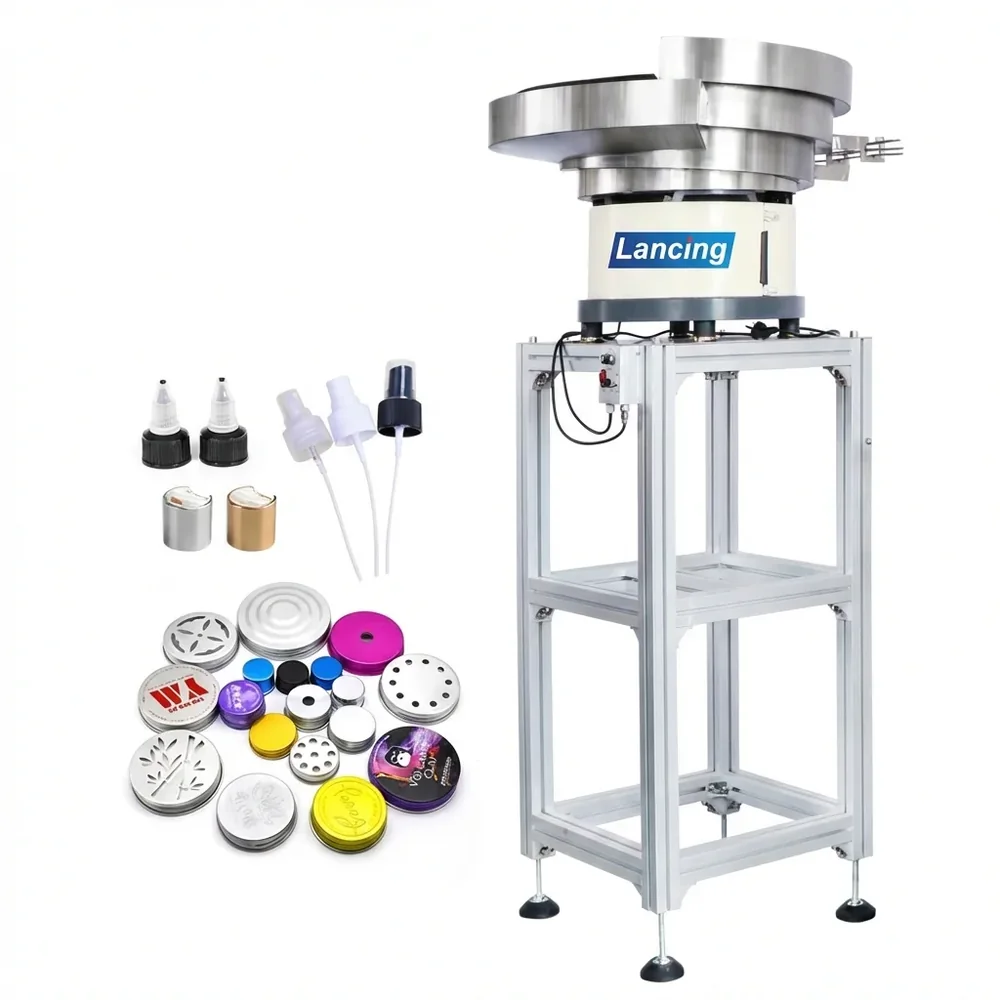
Cap feeder with closure samples
Cap feeders

Automatic cap feeders

Controlled cap supply for automatic and semi-automatic cappers.

Read more
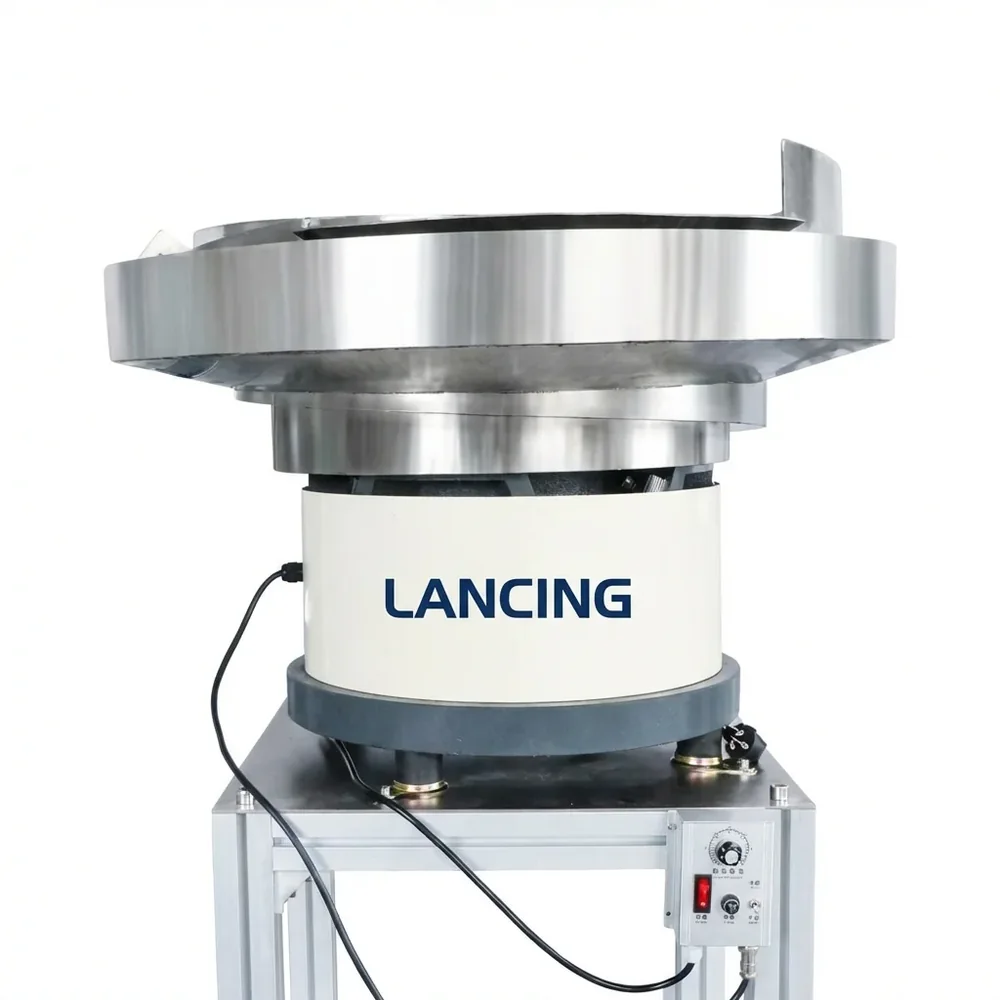
Vibratory bowl feeder close up
Bowl feeders

Vibratory bowl feeders

Bowl tooling and track design for sorting and orientation.

Read more
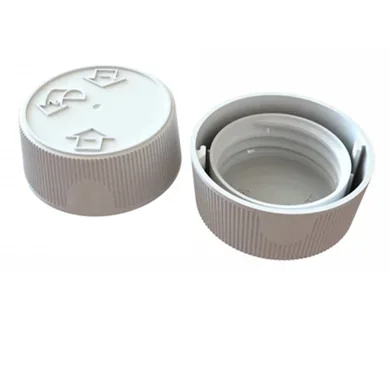
Plastic screw cap samples
Sorters

Cap sorters

Wrong-way rejection and closure presentation before capping.

Read more
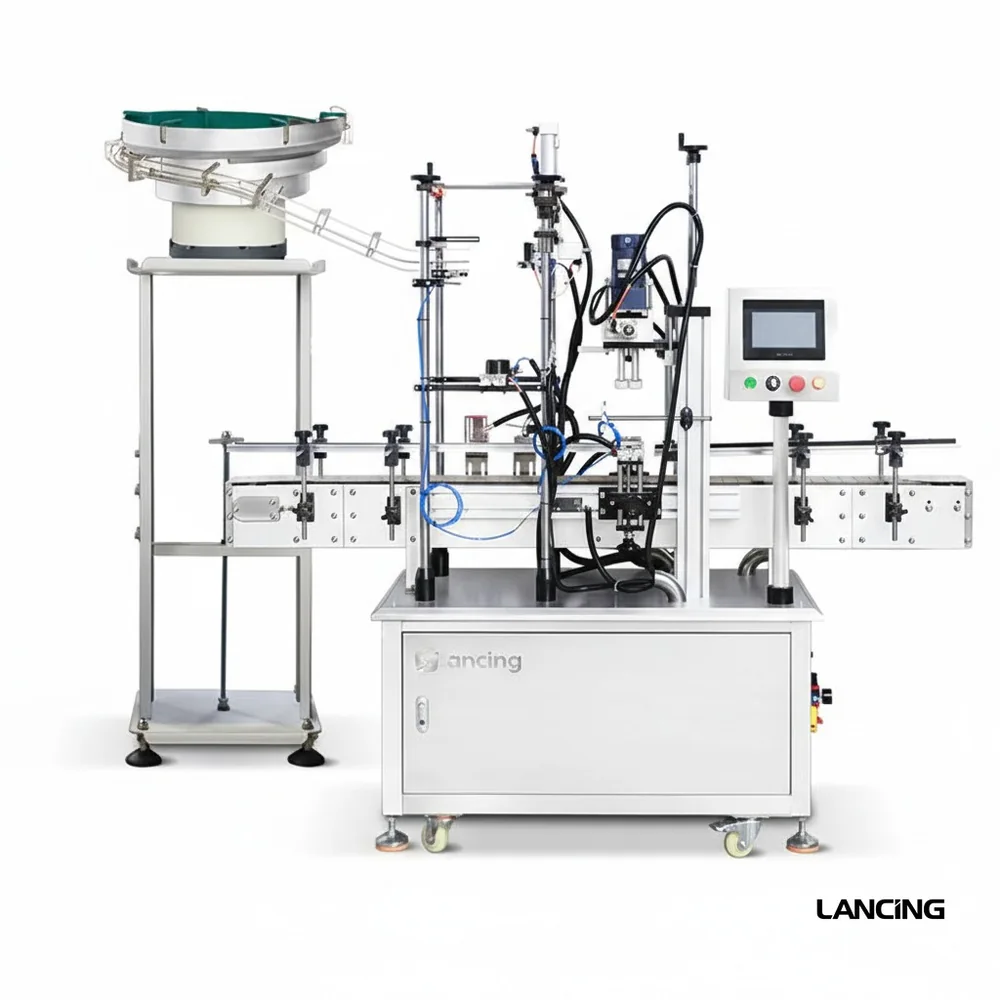
Pump capping machine with bowl feeder
Special closures

Pump and trigger feeding

Feeding support for pumps, sprayers and difficult closures.

Read more
Connected Lancing routes

Built to sit beside the wider Lancing machinery network.

The site now links cap feeding intent to bowl feeder specification, capping machine selection and wider bottle-line planning.

Bowl feeding

Vibratory bowl feeder specification

Use the bowl feeder route when the cap or component needs sample-based tooling, orientation and a stable discharge point.

Visit bowlfeeders.co.uk
Capping

Capper selection and closure type

Use the capping machinery route when the project also needs screw, pump, trigger, ROPP, press-on or complete capping equipment.

Visit cappingmachinesuk.co.uk
Line planning

Filling, capping and labelling context

Use the Lancing UK route when the feeder is part of a wider packaging line, retrofit, installation or project-planning brief.

Visit lancinguk.online
FAQs

Questions about cap sorters.

What is cap orientation?

Cap orientation is the process of making sure every closure reaches the capper in the correct face, angle or position.

Do all caps need sorting?

No. Some caps are easy to feed, but flat, shallow, asymmetric or decorated closures may need more controlled orientation.

Can sensors detect incorrect caps?

Sensors can help with level control and some detection tasks, but mechanical tooling and reject design are usually still important.

Engineering selection detail

Cap sorting should remove the closures the capper cannot use.

Sorting is not only about speed. The sorter has to recognise the usable orientation, reject or recirculate wrong-way caps and avoid damaging caps that may be visible on the finished product.

Orientation

Sort for the capper requirement

A cap can be right-way-up but still wrong for the capper if the chute, head or starwheel needs a different handover.

Orientation systems
Detection

Plan reject and recovery

Wrong-way caps, bridges and empty spaces need a recovery route that does not starve the capping machine.

Jam detection
Chute control

Protect the handover point

The chute should hold enough caps to buffer demand without packing caps tightly or causing double feeds.

Cap-in-chute control
Specification evidence

Information Lancing should check before final feeder selection.

These checks improve quotation quality without assuming unsupported speeds, capacities or format ranges.

CheckWhy it mattersUseful evidence to send
Sorting featureA usable physical feature is needed for mechanical sorting.Cap samples, underside/top photos, skirt profile, tamper band and required final orientation.
Reject behaviourRejected caps must return or discharge without causing a second fault.Preferred reject route, operator access and whether wrong-way caps can recirculate.
Capper demandThe sorter should match capper demand rather than run uncontrolled.Capper speed, chute level requirement, sensor position and stop/start interface.
Surface finishHigh-value or decorated caps may need gentler sorting.Finished caps, including printed or metallic versions, and acceptable handling condition.
Buyer questions

Practical questions before ordering a cap feeding system.

What is a cap sorter used for?

It presents caps in a usable orientation and keeps wrong-way or unstable caps away from the capper handover.

Is a sorter separate from a feeder?

It can be separate or part of the feeder route, depending on the cap, speed and downstream capping method.

What causes wrong-way caps in the chute?

Common causes include poor orientation features, worn tooling, unsuitable chute angle, overfilled tracks or mismatch between sorter and capper demand.

Can sorting be checked from photos?

Photos help early triage, but samples are normally needed to judge behaviour, balance and repeatability.

Do cap sorters need sensors?

Many systems benefit from level or cap-in-chute sensing so the sorter can respond to the capper instead of running continuously.

Orientation evidence

Cap sorters need a repeatable feature to detect or reject the wrong orientation.

A sorter is strongest when the closure presents a reliable orientation feature. If the cap has minimal difference between faces, a shallow skirt or a decorative finish that cannot be marked, the proposed rejection route should be checked with samples.

Sorter checkDesign questionEvidence required
Face differenceCan the system identify correct-way and wrong-way caps?Samples showing top, underside, liner and any tamper band or feature.
Reject pathWhere do wrong-way caps go without disturbing good caps?Preferred recovery route, operator access and acceptable recirculation method.
Chute controlCan sorted caps stay in orientation until the capper?Capper inlet photos, handover height, chute length and cap-in-chute requirement.
Surface sensitivityWill sorting contact mark the cap?Decorated, printed, metallised or production-finish samples.
Sorter handover

The sorted cap still needs a stable journey to the capping head.

The most common failure point is not always the sorter itself. It can be the transfer from sorter to chute, chute to pick point, or cap placement immediately before tightening.

Cap-in-chute

Check the buffer state

A cap-in-chute signal helps manage stop-start behaviour so the sorter does not flood the capper or run dry during production.

Cap-in-chute control
Escapement

Separate one closure at a time

Where the capper needs controlled release, the escapement and cap track should be considered with the capper timing.

Escapement checks
Integration

Keep control logic simple

Start, stop, fault and cap-low behaviour should be agreed so operators know which machine needs attention.

Integration route
What makes a cap difficult to sort?

Caps become difficult when the orientation feature is weak, surfaces are easily marked, caps cling together or the chute cannot hold the sorted orientation.

Is wrong-way rejection enough by itself?

No. Rejection helps, but the good caps still need controlled buffering and a stable handover to the capping machine.

Can sorters be used with existing cappers?

Often yes, but the available space, inlet style, height, controls and guarding need to be checked before a retrofit route is confirmed.

Reject strategy

A cap sorter needs a defined wrong-way and damaged-cap route.

Reject tooling is only effective when the rejected closure leaves cleanly, the return path cannot block and repeated rejects become visible to the operator or control system.

Sorter eventRequired decisionWhat to observe during trials
Wrong-way capRecirculate, collect or re-present according to cap quality and sorter design.Repeat rejects, impact marks, return-path stability and whether the cap re-enters correctly.
Double or nested capSeparate safely or stop if the pair cannot be released without damage.Root cause, hopper level, cap variation and whether nesting repeats.
Deformed closureRemove for inspection rather than hiding the defect through recirculation.Damage source, reject detection and effects on the chute or capper.
Blocked reject pathDetect or make the condition visible before it backs up into the sorter.Collection capacity, return angle, sensor position and operator access.
Sorting and rejection questions

Questions about identifying, rejecting and transferring wrong-way caps.

A sorter must define both the accepted orientation and the controlled route for every cap that does not meet it.

How is a wrong-way cap identified without guessing?

A wrong-way cap is identified from a repeatable physical or detectable difference between the accepted and rejected condition. That may be profile, skirt depth, open-face position, hinge or nozzle direction, centre of gravity or another stable feature shown by representative samples.

Mechanical tooling commonly creates or rejects the orientation, while sensors may support particular checks where the cap and environment allow. The design should state the good condition, each unacceptable condition and how false acceptance will be assessed during a trial.

Compare orientation methods

What should happen to rejected caps after sorting?

A wrongly oriented cap may be returned for another controlled pass when it remains undamaged and suitable for recirculation. A damaged, contaminated or otherwise suspect closure should follow a separate reject route rather than being returned indefinitely to the feed system.

The specification should define where rejected caps go, how recirculation avoids congestion, how operators access the reject point and what condition triggers intervention. This prevents the reject mechanism from becoming a hidden source of repeat jams or surface damage.

Plan reject and recirculation

Why can a correctly sorted cap still fail at the capping head?

A cap can leave the sorter correctly oriented and still rotate, bounce, overlap or lose support in the chute. It can also reach the placement point at the wrong time, meet an unstable bottle or arrive in a queue condition the capper was not designed to accept.

Troubleshooting should therefore observe the complete route from sorter outlet to applied closure. The handover needs the correct guide clearances, queue pressure, cap release, bottle control and signals, not only a successful orientation check at the sorter.

Review the complete handover route

When is a sorter not enough to solve a feeding problem?

A sorter cannot by itself correct poor bulk loading, cap bridging, excessive recirculation, unstable chute transfer, capper timing, bottle movement or missing control signals. It addresses orientation, but reliable production also needs storage, metering, buffering, handover and fault recovery to work together.

Where the symptom appears at the capper, confirm whether the root cause is upstream or downstream before changing sorter tooling. A short video of the complete route under normal demand is often more useful than a still image of the jam point.

Trace feeding faults by system stage
Sorter acceptance

Define what the sorter must reject, recirculate and deliver.

A cap sorter specification is strongest when it states the accepted orientation, unacceptable states, reject route, recirculation behaviour and handover boundary.

Rejected states

List wrong-way caps, nested caps, damaged samples, caps with trapped liners, pumps with tube problems and any closure state the capper must not receive.

Plan reject and recirculation

Control states

Agree whether the sorter stops alone, asks the capper to pause or flags an operator intervention when rejects or queue conditions exceed the agreed boundary.

Review controls and I/O

Commissioning

Use commissioning checks to prove that sorted caps arrive in the expected condition at the capper, including normal stops and restarts.

Open commissioning checklist
Sorter selection

Sorting risks that are easy to miss in a cap sorter brief.

Cap sorting is not only wrong-way rejection. The sorter also has to deal with how caps arrive from bulk storage, how they separate, and what happens to a closure that cannot be presented correctly.

Can the sorter separate nested caps before it tries to orientate them?

If caps travel doubled or nested, a simple orientation track may see the pair as one part. The brief should identify whether separation is needed before final orientation and whether rejects are removed or recirculated safely.

Review nesting risks

Does a crown-cap line need a different sorter route?

Crown caps can require a different orientation method because the open side, liner and skirt shape define the usable outlet condition. The receiving crown capper should determine the accepted presentation.

View crown cap guidance

Should cap orientation be verified after sorting?

Verification is useful when the cost of a wrongly presented closure is high, when cap features are subtle, or when a mixed cap supply could reach the line. The response may be stop, reject or operator alert.

Plan verification

What evidence proves the sorter route is suitable?

Useful evidence includes sample identity, photos or videos of separation, correct outlet orientation, reject behaviour, queue stability and stop/restart recovery. Record limitations as well as accepted results.

Build a test evidence pack
CallQuote